
Sylva’s Story - a walking tour
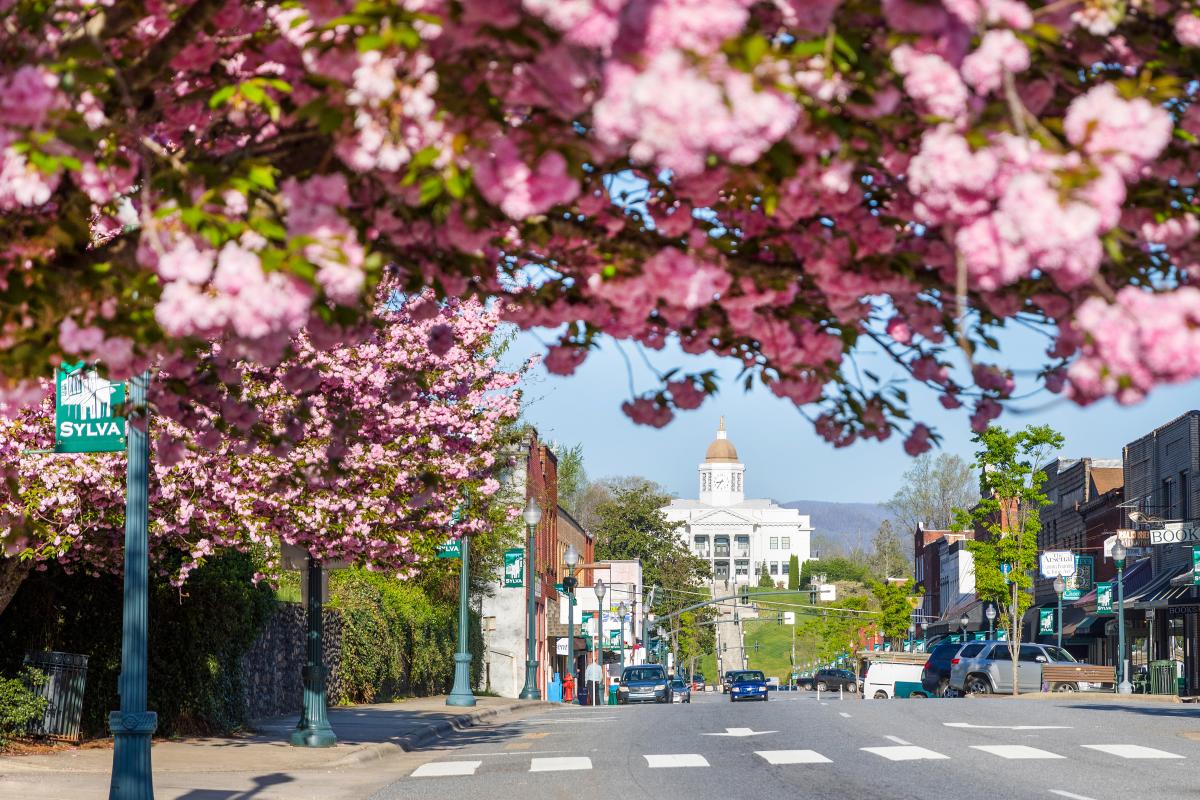
Take a tour down Sylva’s historic Main Street and discover the town’s origins, landmarks, and claims to fame.
Tour made possible by Western Carolina University Mountain Heritage Center, Town of Sylva, and Jackson County TDA
Download a PDF copy of the tour here.
Cherokee Origins
The Cherokee were the first to settle this area. Outside of nearby Bryson City is Kituwah (gih-DOO-uh), the original Cherokee settlement referred to as the “Mother Town.” Several mounds – town center places – are dispersed throughout the area. One of these, Jasper Allen Mound, is located within Sylva’s city limits. Located somewhere between Allens Branch and Scotts Creek, past the paper mill on Skyland Drive, the mound is no longer recognizable due to its excavation in the late 1800s. The mound is named after Daniel “Jasper” Allen, who once owned the mound and its surrounding farmland.
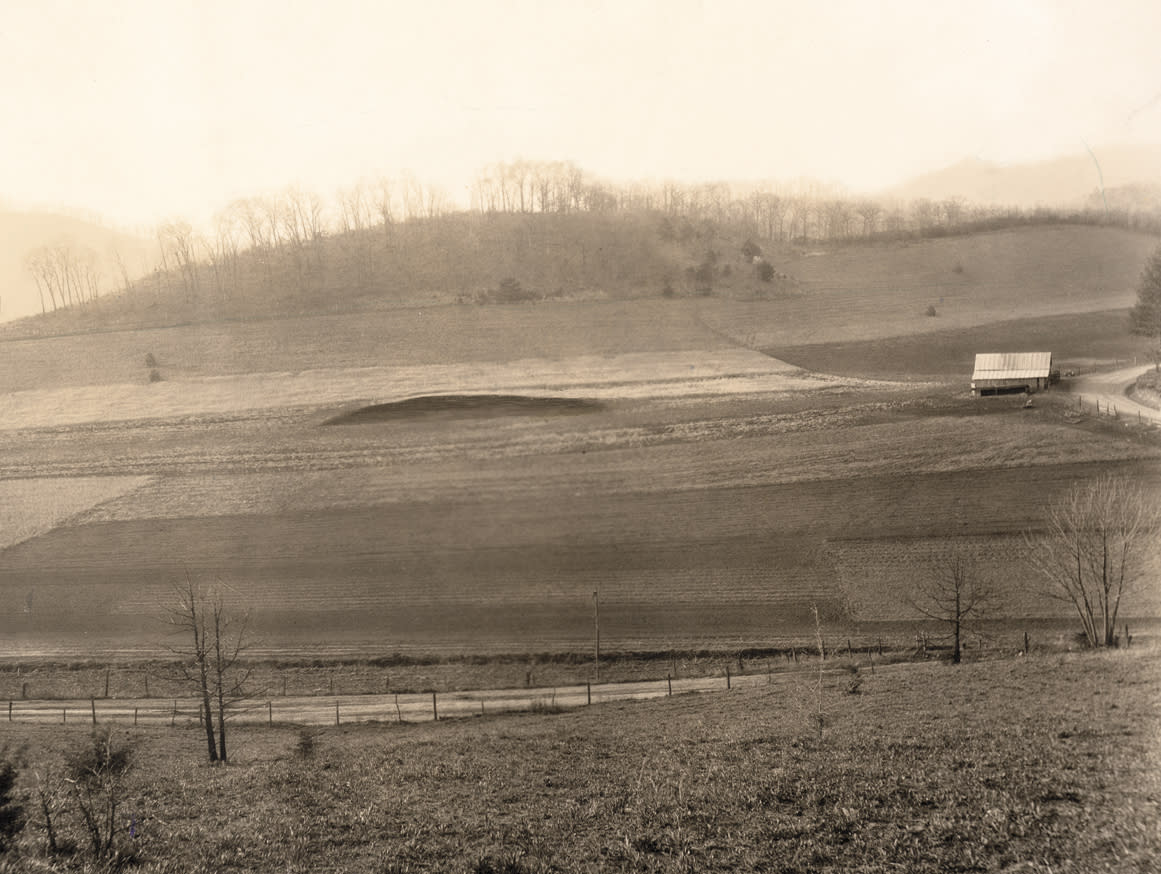 A similar Cherokee mound in nearby Cullowhee.
The Southern Railway
The arrival of the Southern Railway in 1884 marked a beginning for Sylva, connecting the town’s industries to other nearby towns. The town’s boundaries were originally based on the train depot. In 1889, Sylva’s municipal limits were set to be one-half mile North, South, East, and West from its southeast corner. Ten years later, the boundaries were expanded to three-fourths of a mile in all directions, making an octagon shape. The depot served Sylva passengers until 1948 and was demolished in the 1970s. The railroad is still used occasionally for limited commercial purposes. Public restrooms now stand in the location of the old depot.
Jackson County Courthouse
“The Most Photographed”
The Jackson County Courthouse was originally built after local industrialist C. J. Harris’s campaign to move the county seat from Webster to Sylva. The town was starting to boom with the arrival of the railroad in the 1880s. This removal became grounds for debate in the NC legislature. Many thought it would be too expensive. However, the roads in Webster were poor during inclement weather, and the railroad provided easier access to Sylva. In 1913, the legislature allowed the citizens of Jackson County to decide, and they voted in favor of the change. Sylva then became the county seat and Harris built the new courthouse. Designed by Richard Sharp Smith and Albert Heath Carrier, the design was patterned after Madison County’s Courthouse. It was finished in Feb. 28, 1914 and accepted by Commissioners March 1. In 1914, local car dealer J. S. Higdon drove a Model T up the courthouse steps to boost sales. The courthouse clock was not added until about 1952.
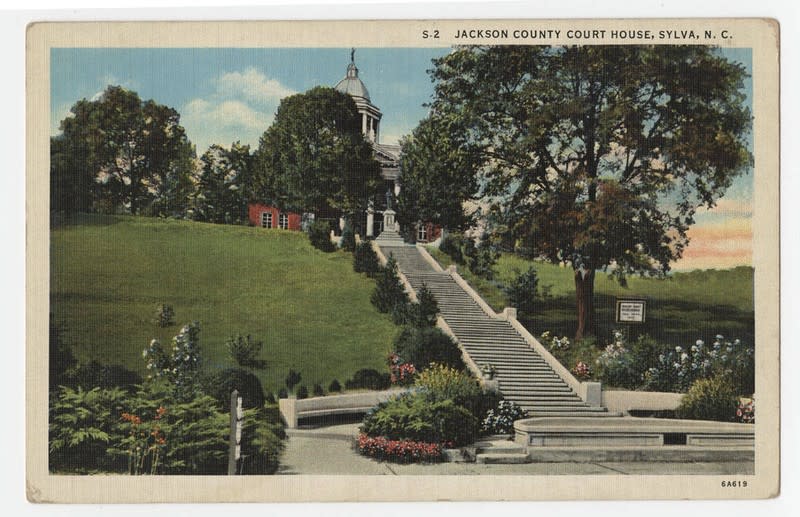
Jackson County Courthouse mid-20th century
Between 2006 and 2011, the Courthouse was remodeled and expanded and reopened as the Jackson County Public Library. Volunteers from the community worked together to transport the last 250 books from the old library—where the police department is today—up the steps to the new one, passing books hand to hand. The Jackson County Justice Center, built in 1994–1995, has served as the home of the county’s courts ever since.
Jackson County & Tuckaseigee banks
Jackson County Bank’s first branch was established in Webster in 1905, the second in Sylva upon removal of the county seat. It operated out of the Harris Building (corner of Main and Spring) until 1926, when a new structure was built. The Jackson County Bank stayed open through the Great Depression with no depositor assets lost. The bank has since changed hands many times and is currently between owners.
Another Webster financial institution, Tuckaseigee Bank, came to Sylva in 1913. Unfortunately, it closed during the Great Depression. Since then, the building has served many purposes under the ownership of Sol Schulman, a well-known Sylva merchant. The community was not devastated by the Great Depression. Many returned to bartering with cash hard to come by.
Sylva pharmacist Bjorn “Johnny” Ahlin wrote that when Jackson County Bank reopened after a 1933 federal “bank holiday,” C. J. Harris averted a run by stacking cash on a lobby table and telling depositors, “Here’s your money; come and get it if you want it.” Rumor held the money came in the back door from Asheville’s Wachovia — but the bank survived, hastening the county’s recovery.
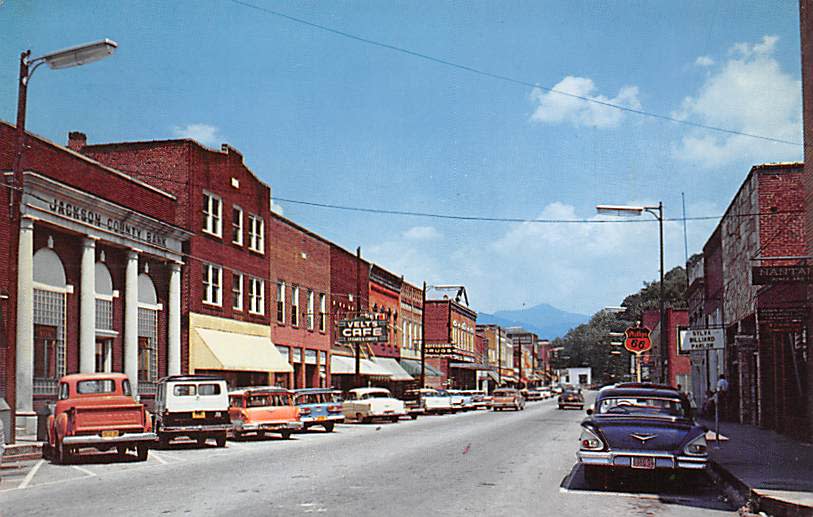
Downtown Sylva looking south about 1960
In 2011, First Citizens moved into the building and demolished it. The historic facade was saved though, and installed onto the new building in 2012. To make it up to the town for demolishing the rest of the building, First Citizens paid for the town’s application to become a Historic District.
Sylva Fires
In April of 1923, a fire decimated several buildings on Main Street. The Commercial Hotel, Medford Furniture Company, Zachary’s Barber Shop, and the house of Abraham and Fannie Simons were all destroyed.
More recently, in 2014, another fire struck downtown, leaving a several businesses
temporarily closed. In both instances, the town recovered quickly after some rearranging and rebuilding.
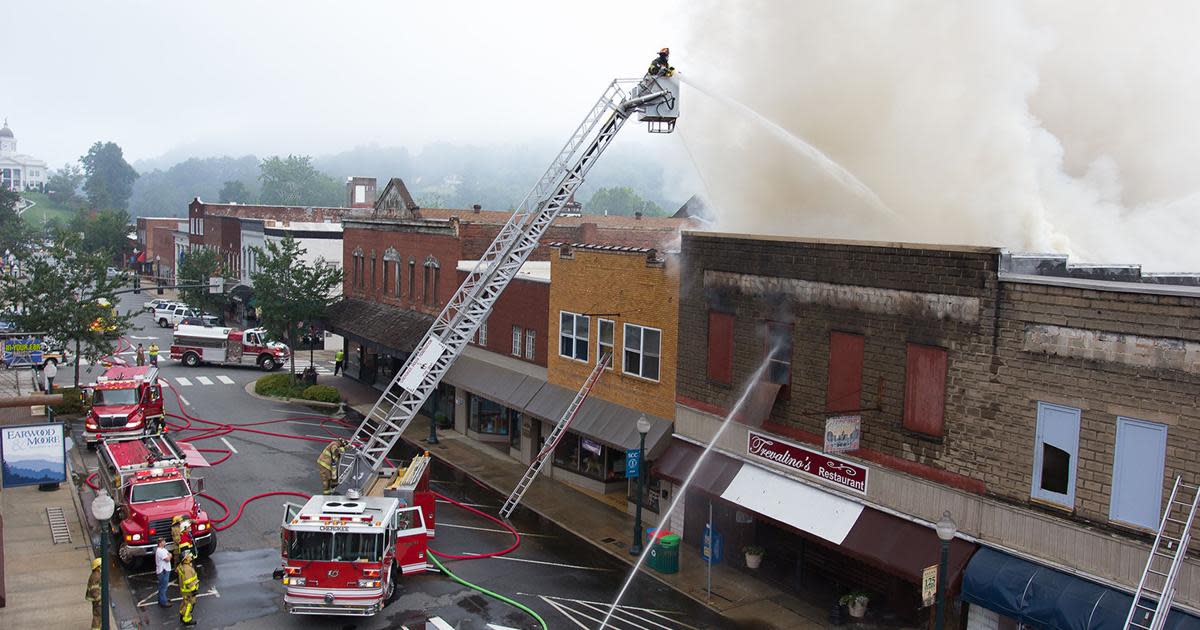 2014 fire on Main St. Sylva
At The Movies
The Lyric, Sylva’s first movie theater, stood where the Lazy Hiker is today (617 W. Main). It was built in 1920, and in 1924, bought by Harry Buchanan. Three years later, he commissioned the construction of a new building to house the Lyric. The old building became The Rodeo, showing only Western films. The new Lyric had 400 seats, state-of-the-art climate control, and a Vitaphone sound system. This brought “talkies” to Sylva, making it the smallest town in the country with sound equipment. Buchanan sold the theater to Jim Massie after financial hardship, and Massie ran The Lyric from 1937 to 1942, when he opened The Ritz Theatre.
The Sylvan Theater began operation in 1927. Douglas Ellington, the architect behind Asheville’s City Building, designed the theater, making this his westernmost project. What looks like a second floor housed a small projection room. This 500-seat venue only operated for a few years, closing in the early 1930s.
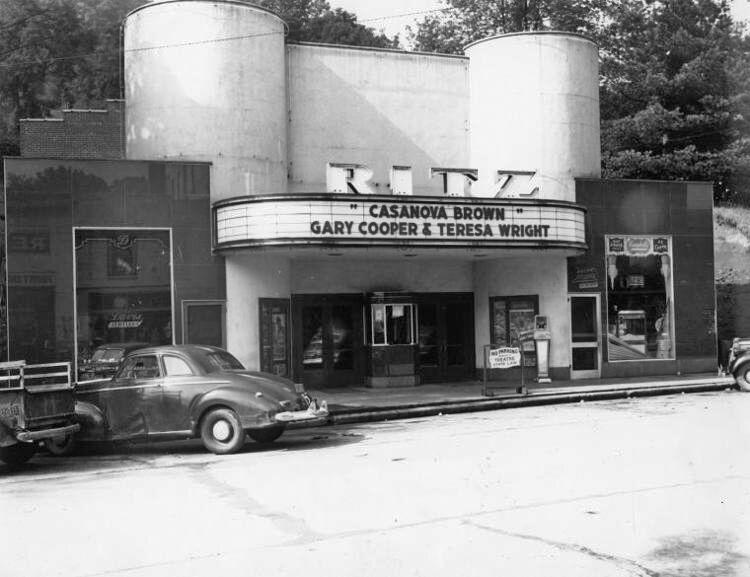
The Ritz Theater ran from 1942 to 1982. It was built to replace the Lyric, seating over 700, and stood where the municipal parking lot on Main is today, across from Sante Wine Bar. Frank Massie intended to manage this one as well, but passed away before it opened. His wife, Elsie Geisler Massie, became the first manager of the movie theater.
Not only has Sylva always enjoyed watching movies, it has also been featured in a few!
*Deliverance
*Three Billboards Outside Ebbing, Missouri
*The Fugitive
There are no longer any movie theaters on Main Street, but if you’re ever in the mood for a movie, head over to Catamount Cinemas in the East Sylva Shopping Center!